AddThis

Bookmark and Share
Showing posts with label passages to the past. Show all posts

Wednesday, 26 September 2012

Gillian Bagwell chooses her Desert Island Books


Gillian Bagwell is a very clever woman. Not only has she managed to write two stunning historicals, and is working on a third, but she's also able to be in two places at once. She's on her way to the Historical Novel Society Conference in London, and she's also here minding my deserted blog, my Desert Island, whilst I'm touring the blogosphere.

Today The Gilded Lily is being reviewed at Unabridged Chick, pop over to see what the verdict is. I am also a guest on Passages to the Past with my post on the artists that inspired The Gilded Lily.You can win a book at both sites by entering the Giveaway.

Now - more about Gillian.

Gillian Bagwell grew up in Berkeley, California, and began her professional life as an actress, studying at the University of California Berkeley and the Drama Studio London at Berkeley before relocating to Los Angeles to pursue a career in film and television. She moved into directing and producing theatre, founding The Pasadena Shakespeare Company, where she served as artistic director for nine years, producing thirty-seven critically acclaimed productions.

She united her life-long love of books, British history, and theatre in writing The Darling Strumpet, based on the life of Nell Gwynn.

Her second novel, The King's Mistress, is about Jane Lane, an ordinary English girl who risked her life to help the young Charles II escape after the Battle of Worcester.

Here are Gillian's choices.
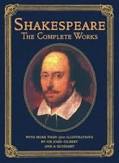
Classic – Complete Works of Shakespeare
I have to choose this – pound for pound it provides more material, and more compelling material, than just about anything else.  Having acted in, directed, and produced a lot of Shakespeare, I find that it’s in my blood.


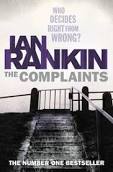
Current – Ian Rankin. He’s a best-selling author in the U.K. and not very well known in the U.S. for some reason. I’ve read all of his Rebus series, and now I’m loving his new series with a new protagonist, Malcolm Fox of the Complaints – the internal investigation bureau of the Lothian and Borders police. Both are crime fiction set in contemporary Edinburgh, and are just want I want to read when I’m writing historical fiction, i.e., something that is completely different than historical fiction!

Non-fiction – all of Liza Picard’s books: Elizabethan London, Restoration London, Dr. Johnson’s London, and Victorian London. Ms. Picard provides a great deal of information about people’s everyday lives—what they ate, how much things cost, how they got around, entertainment and leisure, sex, health, etc. Just what I need when writing historical fiction!


I am a great fan of Liza Picard's books too, so I hope Gillian will leave her selection behind when she leaves!
You can find out more about Gillian and her books at

Twitter - @GillianBagwell

Thursday, 23 August 2012

Bippity Boppety Blog Hop - Researching The Lady's Slipper


This Giveaway is now CLOSED. And I asked my husband to choose two numbers between 1 and 39 and the lucky winners are: Margaret (Literary Chanteuse) and Anme. I'll be writing to you both for a postal address. Big Thank you to everyone who entered and took the time to comment

In honour of the Bippity Boppety Blog Hop, I am offering two signed copies of The Lady's Slipper worldwide, just leave a comment about my post to enter. Don't forget to add an email address.New followers are welcome.
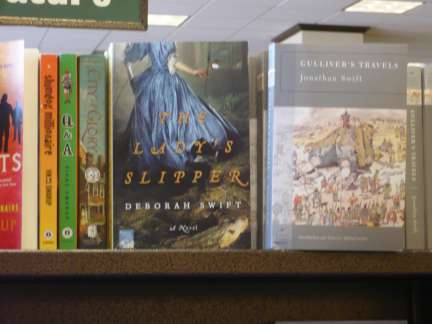
Here is the US edition of the book, on sale next to Gulliver's Travels, sadly I am no relation to the famous Jonathan Swift.


Research and Historical Fiction 
 Many people have asked me about how I do my research and how much time it takes to write a historical novel. So in this post I will take a little about my process, and also tell you about some of the some of the books I found invaluable in my research for The Lady’s Slipper.

My approach was not to try to know everything, but to read some general books on the 17th Century to get a broad picture, and then to start to write the book, filling in the gaps in my knowledge later. I keep a large notebook which is full of questions, for example, “How much was a loaf of bread in 1660?” “In a small village would there have been a bakery, or did people bake at home?” “What sort of bread? Millet? Wheat? Rye?” The answer to the last question was that in Westmorland where the book is set bread was called “clapbread” and was a flat cake made of oats, and it would keep for nearly a month! They had special oak cupboards built into their cottages to keep it in over winter –  frequently the answers are not what you expect but even more interesting. 

So after getting the overview I write my story, but I am left with a bulging and quite daunting note book full of questions. I take a deep breath, start at the beginning again and find out the answers and facts and decide if they help or hinder the story. I think I enjoy the “detective” element of finding out the answers to obscure questions! I read a lot of non-fiction and I am eternally grateful to the “real” historians who supply me with the answers. Books such as The Weaker Vessel by Antonia Fraser which gives a record of women’s lives in the Civil War in their own voices, and Restoration London by Liza Picard which was indispensable for information about daily life. Another favourite was Birth, Marriage and Death by David Cressy, which was always on my desk.


When I began writing The Lady’s Slipper I had no idea that my characters were going to end up on a ship, and of course I knew nothing at all about sailing ships, not even modern ones. No matter how many books I had read on the 17th century beforehand, it was unlikely I would have found out what I needed to know about Dutch Flute sailing ships without doing some very specific research. So I forced myself to read Patrick O’Brian’s books which are all set at sea, and what he doesn’t know about tall ships would probably fit on a postage stamp. They are the sort of historical fiction I would never normally pick up, but they are excellent. I also found out by emailing The Maritime Museum that the cow was stabled “aft”, and that foodstuffs were often sealed in dried mud to keep them fresh on board.
Wonderful Levens Hall, near where I live, on which I based Fisk Manor

To write about people’s homes I spent time at a number of old houses including Levens Hall, which helped me to create Fisk Manor, the home of Geoffrey Fisk in the novel. There is nothing like walking down a 17th century staircase and feeling the polished wooden banisters and seeing the light pour in through mullioned windows. At Swarthmoor Hall I sat and wrote a scene at a gnarled and polished oak table where George Fox the Quaker leader may have sat when he lived there with Margaret Fell. After such an immersion in the past it feels very strange then to get in my car and zoom away!

The botanical facts about the orchid I researched through interviewing members of the Cypripedium Committee, a sort of plant mafia set up to protect the Lady’s Slipper. They meet behind closed doors and the location of the last remaining plant in Britain is a closely guarded secret even today. The single-minded enthusiasm of these men, and their dedication to preserving the plant for future generations gave me confidence in my heroine, Alice Ibbetson’s obsession with it. But I also read novels such as The Orchid Thief and Tulip Fever, which treat similar themes. 

Being a costume designer I could not resist the Northampton Shoe Museum where there are many shoes on display. In The Lady’s Slipper Ella the maid is envious of her mistress’s slippers.Ella's story is told in The Gilded Lily, out in a few weeks time.

Often the research throws up new plotlines and then I will re-write scenes or chunks of the book to incorporate little-known or exciting research. I think to write historical fiction you have to enjoy this aspect of it because you are going to do an awful lot of it. When people ask me how long it takes to research the novel they are thinking in terms of a finite time, but actually I am researching all the time, my living room always has a pile of ten or twelve “current” books I am dipping into, not to mention photocopies and print-outs such as bits of the diaries of Pepys and George Fox and other helpful 17th century scribblers. Did I forget to mention the internet? The phone rings, and I half expect my husband to say, “Hang on, she’s googling.”

This post first appeared on Amy Bruno's site Passages to the Past. Thank you Amy. Amy is organising 
my Blog Tour for The Gilded Lily, find out more at http://www.hfvirtualbooktours.com/

Look to the right to grab the button for this blog hop!
<!-- end LinkyTools script --

Tuesday, 30 November 2010