AddThis

Bookmark and Share
Showing posts with label Storytelling. Show all posts

Thursday, 6 June 2013

Four books on writing that go beyond the basics

Like all writers, I love my craft. Many writing books are aimed at beginners and often give more experienced writers the same information re-packaged. As a writer who is already published you might think that I don't need to read any 'how to' books about writing, but actually the more I write the more interested I get in the subtle nuts and bolts of how storytelling works, and the more I admire other writers who do it differently.

If like me, you want to increase the subtlety in your work then I can recommend the following books. None of them is written by a writer I know, and none of them is about how to write a bestseller.  What are your favourite books on writing? I'd love you to leave me a comment! 
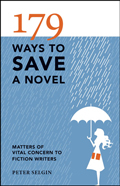
179 ways to save a novel 

Matters of Vital concern to Fiction writers 
by Peter Selgin
The ideas in this book are grouped under six headings: Substance; Structure; Style; Symbol, Myth & Metaphor; Soul and Other Matters.


Self Editing for Fiction writers
How to edit yourself into print 
by Renni Browne and Dave King
This book has great examples and also wonderful cartoons, although it does cover ground that will be familiar to most, such as 'show not tell'. I include it because it is the best basic book on editing I have ever found, and the instructions are really clear.

Front Cover

Between the Lines
Master the subtle Elements of Fiction writing 
by Jessica Morrell
Few books attempt to explore subtleties of tone and voice. This book does just this. Most of the examples given are from the US and this can be off-putting if you are a Brit, but it is still a book well-worth reading.


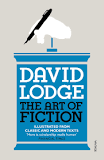
The Art of Fiction 
Illustrated from classic and Modern texts 
by David Lodge
A series of articles from The Independent on Sunday, this book covers such things as 'the intrusive author', 'intertextuality' and 'defamiliarization' using examples as diverse as Charlotte Bronte and Michael Frayn. It is a book of literary criticism from which writers can learn a lot, although it is not strictly speaking a 'how to' book. The examples in this book show just how far you can go as a writer to make your voice your own.

Monday, 26 March 2012

Nutmeg - a perfect little novel


I received Maria Goodin's debut novel via the Amazon Vine programme, having heard it was already set to be translated into four languages even before publication. Published by Legend Press - a small independent publisher, I can quite see why.

I was totally enchanted by this novel which is at once funny, moving and thought-provoking.

The story hinges around the relationship between Meg and her eccentric mother, who is terminally ill. The book is a sensory delight as Meg's mother is obsessed with cooking. What's more she has never told Meg the truth about her childhood but has told her stories that fictionalise Meg's life. Meg's memories are made from her mother's stories. Most of the stories involve food - the tastes and smells of pastry and cakes, herbs and spices. Rebelling against this fictional life, Meg takes refuge in science and cold hard facts. But cold hard facts cannot tell the truth as well as fiction can, and it is this that makes the book so engrossing.

Meg's mother is endearing precisely because of her story-telling and eccentricity, something which Meg's boyfriend, the rational Mark, sees as lies and mental illness. Mark is determined to cling to his own myth of scientific sanity, and his attempts to do so mean he rides rough shod over others sensibilities. When Meg eventually finds out the truth about her childhood, she is left wondering whether the memories her mother invented for her gave her a better start in life than the truth.

The divide between fact and fiction is a slippery one, and one which Maria Goodin exploits brilliantly. So much so, that at the end of the book when Meg's mother's funeral arrives you are left wondering how much of Meg's portrayal of it is real and how much of Meg's story was "True".

Tender, funny and poignant, this has definitely been the highlight of my reading year so far, and one I shall be recommending to all my friends.

Check out Legend Press's website for an extract, or to buy a copy.

Saturday, 27 August 2011

Story is King - Originality


The net is full of writers who want to be the next best seller, whether or not they have been through the route of traditional publishing.

I was interested to read a review of one self-published novel which said it had many typos, errors of grammar and other textual flaws, but that this did not mar the reviewer's experience because the story was so good. The book has sold a lot of copies and is flying high in the e-book charts. I think the flaws might have irritated me more because to me spelling, grammar, and generally 'good' english is part of being a writer. I was brought up to think that way through my old-fashioned education.

But more and more I see that these "good english" skills have been replaced by machines that do the job of checking spelling, grammar, repetition, past participle searching and so forth. So in the current world of writing (at least as far as one reviewer is concerned) Story is King.

There are millions of stories out there all clamouring for an audience. If we are to believe Christopher Booker in The Seven Basic Plots, all of us are replaying ancient myths whether we know it or not, so originality is hard to achieve. What makes an idea original and how can one go about finding something original? And not just to one reader, but to many?

I'm sure it must be partly about voice. The readers must trust the storyteller. On this journey the initial premise of the story must transport them so that the readers lose their own reality and join with the writers vision, but at the same time feel that they are on this journey alone.

Often people say, "It caught my imagination" as if somehow the author has managed to trap it like a butterfly in a net. So, how to catch an imagination? The writer has to make the reader work hard so that they are engaged in creating the scenes in their head, but not so hard that they tire of it and put the book down. This is a hard tightrope to walk, the juxtaposition of the familiar to draw the reader in easily, and the unfamiliar to make it interesting.

Everyone thinks their story is unique, so I cannot claim to have done anything startlingly original, but thinking about this I realise that my best and most surprising ideas come from the following practices:

A lightness of touch. Trying to be original somehow provokes the very opposite.

A sustained attention on the minutiae of the character I am working with.

Researching real events. Truth is often more original than my mind seems to want to invent.

Giving the characters room not to reply to each other in words but to do something physical instead. Allowing them freedom of movement.

"Originality lives at the crossroads, at the point where world and self open to each other in transparence in the night rain."
Jane Hirshfield


Wednesday, 1 September 2010

The Art Of Storytelling

I've just come back from a weekend camping at the West Coutry Storytelling Festival in Devon. I managed to survive sleeping on a sloping airbed that was gradually making its way out of the tent, into the field full of cow pats and two bored-looking rams. I also got used to sitting for long hours on a camping mat whilst I listened to tales long and short, told by the acknowledged experts in their field (excuse the pun!).

Hearing stories told live is a great way to remind yourself of the power of language. Totally ephemeral, the words are gone as soon as they are spoken, so that unlike the written word a story told live relies on the linking of powerful images to guide you through the plot, and to remind you of where you have been. In this spoken language the sound of the words is very important - many storytellers use alliterative devices or rythmic repetition to delight the listener, some stories include passages of poetry or verse. Contrary to popular belief, this is a very sophisticated art form these days, with the tellers carefully crafting their language for maximum effect and impact.

We forget that the novel is a mere three hundred years old and that before that all stories were passed on orally, as a way to transmit wisdom or new ideas from generation to generation. As such, many were teaching stories designed to enthuse a new generation.


At the festival I heard a fair few of these, but also some wonderful performance poetry by Matt Harvey, a word-wrangler whose wit and delivery quickly won him a new legion of fans.

Over the weekend I was privileged to hear Hugh Lupton's well-researched story about poet John Clare, "On Common Ground," in which he posited the idea that if you become disconnected from your land or your roots you are being literally taken "out of your mind." Cleverly weaving some of Clare's own poetic lines into the story, this was a treat to hear. John Clare's life is fascinating coinciding as it does with the Enclosures Act in England which radically and permanently changed our landscape.

By the way, I have several of Hugh Lupton's tales on CD, including The Iliad and The Odyssey which I highly recommend. Greek myths dull? Not told this way they're not.

A great presence at this festival was the traditional tellers including the enthusiastic Clive Fairweather who knows over 400 traditional tales by heart, and who told us a 600 year old story that has recently been translated from old english and had its first airing since that time at the festival.

So what did I learn from the storytellers that I can transfer to my own writing?
  1. First - no rambling. If a live teller rambles we soon get bored and begin to shuffle on our camping mats!
  2. The more odd and unlikely the image, or the more beautiful, the more it sticks.
  3. Recap any particularly salient points, but not in the same words as before.
  4. Use plenty of dialogue and keep description to one or two well-chosen images.
  5. Vary your voice (or in the case of writing aim for a variety of tone)
  6. The audience likes to be surprised, to expect one thing and be given something different.
  7. It is alright to use a refrain, an image or words that return again and again.
  8. Language is infinitely flexible, the human being will try to make sense of even the most nonsensical statements, so be bold.
  9. Characters must be individuals, whether prince or wolf or stupid Jack, each one must have his own particular idiosyncrasies and not just be a mere cipher.
  10. The ending must fulfil the promise of the beginning of the story, with a twist.
And the other thing I learnt? To make sure I read my novel out loud, to feel the taste and texture of what I have written.

Sunday, 25 October 2009

Myth and Memory

Last night I was privileged to see a live storytelling event called "Hunting the Giant's Daughter" at Lancaster Litfest.
The story is a re-telling of an old myth from the Mabinogion. It is a tale that hides its wisdom beneath heroes and villains, blood and thunder, the living landscape of seed and tree.
At about two hours in length and told by one teller, with the help of a musical accompaniment, we were asked to conjure a whole world from the words of the storyteller. Today most of our stories are given to us visually on television or computer and very few are conjured in our own imaginations, spurred on by the poetry and rhetoric of a live voice. The experience was a potent one, not least because it was shared with the rest of the audience, who had the same, but also their own unique, rendition of the story in their imagination. Each person had made what was real for them.It led me to think about how we as writers create these "pictures in the head."

Memory or Imagination
So, are these pictures from our imagination - i.e are they something new, or are they a compilation of our memories? And if so, how much of the archetypal memory do we have access to? As a writer this topic interests me because part of the mystery of writing is that often I am the teller, but the story - the story, is not mine. It exists somewhere else already, and I need to remove myself somehow for the story to come to life. Anyone who has read Christopher Booker's "The Seven Basic Plots" will be familiar with the idea that stories perhaps follow archetypal patterns - an idea which can be ignored, or used to the writer's advantage. So here is an idea - perhaps next time approach your story as if it is a memory - a hidden memory. That you were there, but have just forgotten.

A Real Quest
If there is anyone out there who is interested in how Story and Myth meet, and wants to go on a real Quest, right now, this moment, a writer friend of mine has set up a website for just this purpose. You can find it at http://www.crystalsword.co.uk/

Riddle of the Day
Name me and I cease to exist.