

As you might have noticed, my blog has transferred itself to my brand new website. For the moment I am linking to it from here too, but I hope you will follow me on the new site - click below for the link to Helena's post on Novellas.
http://riddleofwriting.deborahswift.com/2013/10/19/the-historical-novella-tips-from-helena-p-schrader/
Thank you for following me!
Showing posts with label writing tips. Show all posts
Showing posts with label writing tips. Show all posts
Saturday, 19 October 2013

Thursday, 27 June 2013
A fresh approach to writing what you know - get away!
 I've just been to Florida for the Historical Novel Conference. Apart from being able to attend wonderful sessions on all aspects of writing historical fiction, it was also a chance for me to go somewhere completely different and take in another landscape from the one which I look at every day.
Florida is flat, sunny and riddled with water - lakes, rivers and creeks. The roads are wide, level and straight and everyone cruises in big cars at fast speeds. The palm trees sway in breezes or sometimes hurricane style winds. Buildings are low and spread wide apart with no fences between the gardens. Crows and squirrels are skinny; they don't need much fat to keep them warm as the air there is hot and moist.
This is totally different from my English landscape. Where I live, the sky is smaller, framed by hills. Blue skies are a rarity and the roads are narrow, winding and banked by clusters of stone cottages. Today as I look out of my window a fine mist is drifting from the sky putting a damp veil over everything. The sky is almost colourless, a uniform white/grey as if it is illuminated like paper from behind.
One of the things I enjoyed about Florida was that it gave me (even if only for a few days) the chance to look at England through a stranger's eyes. And a stranger's eyes are what a novelist needs to bring freshness to the page. It is easy to forget that I have readers in other parts of the world who will read 'in the front garden' as something quite different from my intended version.
If you can't actually get away, then anything that gives you a new perspective will work just as well to invigorate your writing. Who could fail to look at life a little differently after viewing Salvador Dali's take on life? Hard things are suddenly mutable, furniture needs to be propped up by crutches, time bends and turns back on itself.
 |
| Outide the wonderful Salvador Dali Museum in St Petersburg |
 |
| Picture from www.circusnospin.blogspot.com |
 |
| Howard's scale model |
 |
| Ringling Museum - courtesy of Tripadvisor |
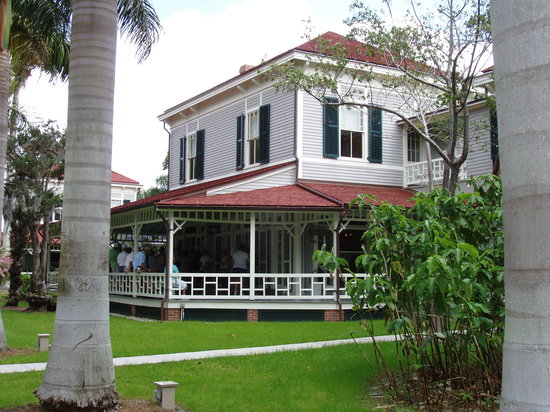 |
| Ford Edison Estate courtesy of Tripadvisor.com |
Whilst in Florida we travelled from beaches to cities, always with a museum or two in mind. Highlights for us were the Ringling Museum and the Ford Edison Country Estate.

Whilst visiting the Titusville Museum, run by a bunch of enthusiasts for their local history, I came across this lovely little second-hand bookshop and had a conversation with the owner about Deborah Harkness's new book. If you are near Titusville, do go check out the shop, The Book Rack, it has a great selection of Historical Fiction and Historical Romance.

Before signing off this post, I must mention fellow historical fiction bloggers who were on my panel at the conference; Circus drumroll please!
Julianne Douglas
Heather Webb
Heather Rieseck
Amy Bruno
I had a fabulous time in Florida, came back refreshed and renewed and itching to get back to my writing.
Thursday, 6 June 2013
Four books on writing that go beyond the basics
Like all writers, I love my craft. Many writing books are aimed at beginners and often give more experienced writers the same information re-packaged. As a writer who is already published you might think that I don't need to read any 'how to' books about writing, but actually the more I write the more interested I get in the subtle nuts and bolts of how storytelling works, and the more I admire other writers who do it differently.
If like me, you want to increase the subtlety in your work then I can recommend the following books. None of them is written by a writer I know, and none of them is about how to write a bestseller. What are your favourite books on writing? I'd love you to leave me a comment!

If like me, you want to increase the subtlety in your work then I can recommend the following books. None of them is written by a writer I know, and none of them is about how to write a bestseller. What are your favourite books on writing? I'd love you to leave me a comment!
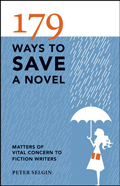
179 ways to save a novel
Matters of Vital concern to Fiction writers
 Self Editing for Fiction writers

 Illustrated from classic and Modern texts
by Peter Selgin
The ideas in this book are grouped under six headings: Substance; Structure; Style; Symbol, Myth & Metaphor; Soul and Other Matters.
 Self Editing for Fiction writers
How to edit yourself into print
by Renni Browne and Dave King
This book has great examples and also wonderful cartoons, although it does cover ground that will be familiar to most, such as 'show not tell'. I include it because it is the best basic book on editing I have ever found, and the instructions are really clear.
Between the Lines
Master the subtle Elements of Fiction writing
by Jessica Morrell
Few books attempt to explore subtleties of tone and voice. This book does just this. Most of the examples given are from the US and this can be off-putting if you are a Brit, but it is still a book well-worth reading.
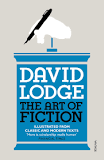
The Art of Fiction
by David Lodge
A series of articles from The Independent on Sunday, this book covers such things as 'the intrusive author', 'intertextuality' and 'defamiliarization' using examples as diverse as Charlotte Bronte and Michael Frayn. It is a book of literary criticism from which writers can learn a lot, although it is not strictly speaking a 'how to' book. The examples in this book show just how far you can go as a writer to make your voice your own.
Friday, 22 March 2013
Creating Secondary Characters in Historical Fiction
Riddle: How does an author use
historical fact to create and describe secondary or minor characters in historical
fiction?
Following
on from Helen Hollick’s fascinating discussion of her protagonists I’d like to
talk about secondary and minor characters in historical fiction.
Secondary characters are often used to develop the
main character(s) and/or move the plot. Whether or not the protagonist was a
real person these characters are frequently fictional constructs, and, like
minor characters, in the story to serve a purpose. They do, however, have to be
believable; meaning they should develop or change during the course of the
novel, and have identifiable strengths, foibles or flaws readers can relate to.
An example of this is my character
Marcos Alonso Almendro in The Chosen Man
(Knox Robinson Publishing, 2012). Here’s a scene from the novel where the main
character, wicked, wily Genovese merchant Ludo da Portovenere is making his
first moves to manipulate the tulip market in Holland
Leaving a glorious day of bright summer
sunshine, Marcos followed Ludo through a door and stepped into a netherworld of
peat-filled grates and dark afternoons. It wasn’t the typical atmosphere of
Dutch taverns he had already come to know – that particular hush broken by
hearty guffaws and back-slapping camaraderie – this place was a composite of scents
and sounds he could not name. There was one odour in particular, a pleasant
aroma but not the usual malty smell of warm beer, nor the clear liquid that
they served in thumb-sized tumblers that smelled like a woman’s perfume. He
stopped and inhaled.
“Coffee,” said Ludo. “Like it?”
“It’s wonderful.”
“Doesn’t taste as good as it smells, but
you can add it to your list of new accomplishments.”
Marcos gulped, the bastard knew about his
journal. He knew everything – all the time! But the Italian wasn’t interested
in him, his eyes were scanning the darkness: an eagle-owl detecting its prey in
the half-light.
Groups of men smoking curled-stem pipes
were gathered around circular tables. Above, on a balcony, six or seven
burghers huddled in negotiation. One smaller table was occupied by a single
client. Ludo put a hand on Marcos’ shoulder and steered him towards a corner. A
stub of candle stuck in a wine bottle flickered as they disturbed the heavy
air.
“Why’s
it so dark?” Marcos asked.
“So people can’t see each other I expect.”
Ludo
removed his wide brimmed hat and placed it conspicuously on top of his
miniature sea chest in the centre of their table (. . .) settled himself into a chair and
leaning back in his customary manner, gazed around him. “Dark is what they are
used to,” he said. “Light is a special commodity in the Low
Countries and your average Dutchman is too tight-fisted to waste
money on candles. Candles offer no material return by definition.”
“You don’t like the Dutch, do you?”
“On the contrary, I enjoy them greatly: trying to
out-manoeuvre them is one of my favourite pastimes. Successful strategy is the
finer point of profit, Marcos. If you don’t like ...” He was
interrupted by the serving girl.
Marcos watched the way the plump wench
looked at Ludo. What did women see in him? He wasn’t
good-looking. Could they smell his money?
“I’ve ordered coffee for you to try, but not at this table.
You’re my servant remember, you should be over there.” Ludo nodded in the
direction of the kitchen area. “But stay close and keep an eye out for
onlookers. I’m expecting company and I want to know who sees us talking. If you
notice anyone taking a special interest, follow him. Find out who he is, and
where he lives if you can. I’ll see you back at the lodging tonight if we are
separated.”
“Yes sir.” Marcos got up and doffed his soft cloth hat. It
wasn’t a fatuous move, Ludo’s tone was too serious for that.
“Chat up the waitress,” added his master, “see if that man
up there by himself is a regular or if he just came in today.”
“How shall I do that? I don’t speak Dutch – or French – and
she won’t have any Latin.”
“You’ll manage. Languages are only an
obstacle to people with no imagination. Do you have an imagination, Marcos?” .
. .
Marcos
leaned against the high trestle table that acted as a bar at the back of the
tavern. The waitress placed a small white china cup beside him and smiled. He
winked and lifted the cup. Keeping his eyes on the girl’s blue gaze he gulped
the hot brown liquid. The wench smiled as his eyes opened in shock and
surprise. He would have spat out the foul tasting stuff immediately but she was
in his direct line of fire: she’d put herself there on purpose. He moved the
scalding, bitter liquid around his mouth and forced himself to swallow. The
cheeky wench laughed, said something incomprehensible and raised a hand holding
a bowl of brown granules. With her free hand she spooned some into his cup and
stirred. Marcos stared at the brown poison. He was going to have to drink it.
The girl mimicked his wink and waited until he had the cup to his lips again
before skipping off to serve new customers.
Marcos took just a very small sip. It
tasted better. In fact it was quite nice. Crossing one leg in front of the
other and leaning sideways with an elbow on the high bench behind him, in what
he considered the appropriate stance for a coffee habitué, he took in his murky
surroundings. The door to the street opened and in that instant of light
something on the balcony caught his eye, he glanced up. Something had glinted.
That something was a pair of round spectacles on the round face of a gnome-like
creature from a children’s fairy tale; a shoemaker, a tailor. Whoever and
whatever he was, he was bending down observing Ludo through the balcony
railings with far too much interest. Marcos looked for the girl; now he needed
to find out about two men. But exactly how he was going to learn anything at
all was quite beyond his imagination.
Without knowing it at the time, this
scene follows Helen Hollick’s tips for writing historical fiction, with one
exception. Regarding her first point on research and story, I tried to put
myself into the setting to create the atmosphere and imagined what it must have been like in a Dutch tavern in1635. I
needed the secondary character, Marcos, to start acting on his own, and I
needed to show the protagonist, Ludo, was not to be trusted. Fact in historical
fiction is vital: accuracy in setting and detail is essential. But, when it
comes to the plot and fictional characters take Helen Hollick’s advice, “Don’t
get so bogged down in research that you never get on with writing your story”.
Avoiding ‘gadzooks vocabulary’ is both easy and
difficult: employing diction that is appropriate to the time and setting, while
also being in the modern lexicon sometimes means looking up words to find out
when they were first used, and making some surprising and disappointing discoveries.
In this scene I use the word ‘waitress’. It sounds like a relatively modern
term for the setting, but I wasn’t happy about using ‘serving girl’ all the
time, it was awkward; and the idea of ‘serving wench’ carries vulgar
implications that distracted from what was happening. The term ‘waitress’ slipped
in and felt appropriate because it reduces the girl to her function, making her
less relevant to the incident and maintaining the focus on what Marcos is
doing, and is about to do.
When I did finally did check ‘waitress’,
I was delighted to find the term waiter
goes back to the 14th century and was used for males waiting at
tables in taverns in the 17th. Unfortunately, the term waitress wasn’t in common use until the
early 19th century - but it might have been . . .
Thanks Jane, you can find out more about The Chosen Man and JG Harlond's writing at www.jgharlond.name
Friday, 8 March 2013
Enjoying cliché - Writing Tips from Helen Hollick, author of Ripples in the Sand

Today I'm delighted to welcome Helen Hollick, author of the bestselling Arthurian Trilogy which includes 'The Kingmaking', and now releasing her fourth book about the pirate, Captain Jesamiah Acorne.
Hi Helen, I am looking forward to reading about Jesamiah Acorne. What for you makes a good hero, a good heroine and a good villain, and how do you make them believable and not a cliché for a modern reader?
In some ways, the clichéd hero, heroine and villain is partly expected and therefore enjoyed, but this depends on the book, the characters and the plot! I suppose my Jesamiah is a little clichéd in the fact that he is tall, dark, and good looking. He is the sort of hero you wouldn’t want to meet in a dark alley if you’d previously upset him – quick to smile, but formidable when angry – you can rely on him to be there (cutlass or pistol in hand) when he’s needed. He isn’t fazed by danger, won’t tolerate unnecessary cruelty or disrespect to women, but is not always ‘polite’ with his language. (He is a pirate, and pirates don’t use genteel language do they?) He is more than capable of getting drunk if the rum is available, and his morals slip occasionally when there’s a good-looking woman tempting him. But he is loyal to his men, and would give his life for his woman, Tiola – indeed he took a flogging on her behalf in the second Voyage, Pirate Code.
A heroine needs to be tough-minded, to know what she wants and be determined to get it. She must be true to her cause (be that her ‘quest’ or her man), capable of chucking the teddies out the cot when riled, but balance that with love without condition. As for the villain – the more dastardly the better *laugh*.
The adventures (and some tricky situations) that Jesamiah finds himself in possibly are clichéd – you know that if he is in trouble he is going to get out of it, as in any hero-type novel or movie, but the trick is to write at a good pace, keeping the pages turning and for the reader not to be able to guess how the hero gets out of trouble! Belief has to be suspended by action. No one believes any of the situations in the James Bond or Indiana Jones movies – but so what? They are not meant to be believed, they are meant to be enjoyed as a bit of escapism fun.
Jesamiah is a blend of C.C. Forrester’s Horatio Hornblower, Patrick O’Brian’s Jack Aubrey, Indiana Jones, James Bond and Bernard Cornwell’s Richard Sharpe… with a hefty dash of Captain Jack Sparrow added as a bonus! He has his flaws and weaknesses; he is not all ‘good guy’, there are times when you want to cheer him on – other times you could slap his face. That’s life – especially for an ex-pirate!
I enjoyed your book about writing and editing, 'Discovering the Diamond'. Can you give a historical fiction writer 3 short writing tips from the many 'gems' in your book?
Thank you Deborah – I wrote it with my UK main editor, Jo Field, because we were getting inundated with questions about writing, and found we didn’t have time to keep typing out the same replies. We figured a short, non-expensive, e-format booklet might prove useful, and we are delighted that Discovering the Diamond is serving its purpose and has been well received.
Three tips?
1. Don’t get so bogged down in research that you never get on with writing your story.
2. Don’t use ‘archaic’ language. ‘Gadzooks ye bounder’ might sound authentic, but believe me it is very irritating to read! Likewise, do not use modern language ‘OK’ sounds just as odd.
3. Watch those anachronisms. You cannot have ‘He froze like a rabbit caught in the headlights’ in a novel set in Tudor England where headlights haven’t been invented yet.

Thanks Helen, great tips and thank you for guesting on my blog.
Helen is published by www.silverwoodbooks.co.uk
Thursday, 6 October 2011
Reading Guides - extra value for your readers, and how to write one
 I am nearing the end of proof-reading my new novel, The Gilded Lily, and have decided to make a Reading Guide for it. When I brought out The Lady's Slipper, St Martin's Press asked me to put one together and I really enjoyed it. I thought of it as a bit like the extras on DVD's - the "Making Of" or "Behind the Scenes" that seems to so often accompany a film.
It gave me a chance to tell the reader what inspired the book and to give some historical background that would help with their understanding. St Martin's Press suggested a really good format, so I thought I'd share it with you. If you are about to self-publish your book, why not add a Reading Guide, an added extra for your readers which will illuminate, educate and entertain.
Here are some suggestions for content:
The story behind the story.
What inspired you to write that particular book, and how does it relate to your career/hobbies/skills? This is a story, so take as much care as with your book itself to make it a good story. Perhaps there was an interesting incident whilst you were writing it, or a sudden realisation that made writing the book essential.
The historical or technical background to your book
A chance to help the reader understand the context of your book, when and where it was set. I remember reading Geraldine Brooks's reading guide in Year of Wonders in which she described how living in a small village made her understand the tensions of the closed-off village of Eyam during the plague. I used mine to explain about the tensions of the English Civil War, particularly for US readers who only know about the US Civil War and little about the English Civil War.
A Meet the Author profile
Just what it says, a little bit about yourself, especially anything that relates to your writing. You can say where you live or were brought up, something of your non-writing life too will give the impression of a well-rounded person. A good way is to ask someone else to interview you, the answers will sound more natural and less like you are selling yourself.
Fun Facts
Even in a novel there may be interesting facts to highlight for the reader. For The Lady's Slipper I could have chosen fun facts about shoes, or about Restoration fashion, or even "Gruesome Facts" about the Civil War, but chose instead to appeal to gardeners and flower lovers by giving them snippets about orchids. Here are my examples:
- The lady’s slipper orchid is also known as American Valerian, Nerve Root, Camel’s Foot, Steeple Cap, Noah’s Ark, Two Lips, and Whippoorwill’s Shoe.
- One of the most famous, endangered wildflowers in the United States is the pink lady’s slipper,Cypripedium acaule. But it is officially endangered in only two states: Illinois and Tennessee. Georgia lists it as “unusual.” New York lists it as “exploitably vulnerable.” But in the other twelve states it is not listed at all! Even wild flowers like this one can be quite common in many places. The Endangered Species Act required that each state create its own list of plants (and animals) that need protection within its (state) borders. These lists are updated regularly. You can find out which plants are endangered in your state by visiting www.americanmeadows.com.
- One of the earliest books about North American plants is from Jacques Philippe Cornut’s Canadensium Plantarum. Published in France in 1635, it features an illustration of a yellow lady slipper. Cornut himself never visited America, though he received imported New World seeds and plants for his botanical garden in Paris. See illustration below.
And yes, a picture is a good idea. Even a black and white picture adds a little bit extra. It could be a photo of you, or something else relating to your book.
This could include books that have directly influenced your own book, or ones on a related theme or from a similar period. It is nice to explain why you chose them or how the writer influenced you. See my reading guide for examples. I really loved this part and found it hard to choose only ten books. But I decided I wanted to pique the readers' interest, not drown them!
Discussion questions
Discussion questions
Make sure these are a mixture of general and easy, such as "discuss the Character of X. What does he contribute to the novel?" and harder and more exacting, such as "In what way does the language of the novel reflect X's obsession with food?" That way, your questions will suit a wider range of people and groups. Don't be afraid to highlight your major themes through questions. Sometimes readers read the Reading Guide first, so it can help to point readers to your major concerns, whether your book is deep literary fiction or light entertainment.
If you feel your book has no deep themes in itself, make your questions more about the characters, or ask them to compare the characters' lives with their own.
Your next book
Don't forget to mention your next book somewhere. I nearly did!
Hope you enjoy writing yours as much as I did mine. If you are a writer with another example, please add a link to it in the comments below. Thanks!
You can look at my whole Reading Guide here
Hope you enjoy writing yours as much as I did mine. If you are a writer with another example, please add a link to it in the comments below. Thanks!
You can look at my whole Reading Guide here
Saturday, 27 August 2011
Story is King - Originality

I was interested to read a review of one self-published novel which said it had many typos, errors of grammar and other textual flaws, but that this did not mar the reviewer's experience because the story was so good. The book has sold a lot of copies and is flying high in the e-book charts. I think the flaws might have irritated me more because to me spelling, grammar, and generally 'good' english is part of being a writer. I was brought up to think that way through my old-fashioned education.
But more and more I see that these "good english" skills have been replaced by machines that do the job of checking spelling, grammar, repetition, past participle searching and so forth. So in the current world of writing (at least as far as one reviewer is concerned) Story is King.
There are millions of stories out there all clamouring for an audience. If we are to believe Christopher Booker in The Seven Basic Plots, all of us are replaying ancient myths whether we know it or not, so originality is hard to achieve. What makes an idea original and how can one go about finding something original? And not just to one reader, but to many?
I'm sure it must be partly about voice. The readers must trust the storyteller. On this journey the initial premise of the story must transport them so that the readers lose their own reality and join with the writers vision, but at the same time feel that they are on this journey alone.
Often people say, "It caught my imagination" as if somehow the author has managed to trap it like a butterfly in a net. So, how to catch an imagination? The writer has to make the reader work hard so that they are engaged in creating the scenes in their head, but not so hard that they tire of it and put the book down. This is a hard tightrope to walk, the juxtaposition of the familiar to draw the reader in easily, and the unfamiliar to make it interesting.
Everyone thinks their story is unique, so I cannot claim to have done anything startlingly original, but thinking about this I realise that my best and most surprising ideas come from the following practices:
A lightness of touch. Trying to be original somehow provokes the very opposite.
A sustained attention on the minutiae of the character I am working with.
Researching real events. Truth is often more original than my mind seems to want to invent.
Giving the characters room not to reply to each other in words but to do something physical instead. Allowing them freedom of movement.
"Originality lives at the crossroads, at the point where world and self open to each other in transparence in the night rain."
Jane Hirshfield
Image from: http://www.paintermagazine.co.uk/
Tuesday, 15 March 2011
The Tuesday Tip - One sentence
Scent and smoke hit the taste buds with a thwack at three o'clock in the morning. (first version)
Scent and smoke and sweat can suddenly combine together and hit the taste buds with an acid shock at three o'clock in the morning. (second attempt)
The scent and smoke and sweat of a casino are nauseating at three o'clock in the morning.
Opening sentence of Ian Fleming's first James Bond Novel, Casino Royale.
Tuesday Tip - One sentence can be the key to your whole book.
This anecdote from "Writing Your Way" by Manjusvara.
Tuesday, 1 March 2011
The Tuesday Tip
On Tuesdays I post a tip for writers.
Today - Repetition.
Remember trawling through your manuscript trying to spot the repetitions, such as "Who's calling," he called.
Or perhaps, "He eyed the maid with interest. "Aye," he said, looking her in the eye, "I'm Iron Jack, the ironmonger, and I've come to collect Eileen's ironing."
I know, none of your writing is as bad as that. But if you laughed guiltily at the first example, here is the answer. A neat little downloadable gadget that will scan your manuscript for you and do all the hard work.
Here's the link.
http://www.gaddy.fr/repetitiondetector/online.php?l=en
Subscribe to:
Posts (Atom)


