AddThis

Bookmark and Share
Showing posts with label fiction. Show all posts

Friday, 11 September 2015

Female Mystics in Fiction


I have just finished 'Illuminations' by Mary Sharrat, about Hildegard von Bingen. A reader might be surprised that there could be so much plot in a book which is essentially about a woman enclosed firstly as an anchorite, and later as a nun. However the enclosed nature of her life brings Hildegard into conflict not only with her 'captors' but also with those with whom she shares her religious life, and this provides Sharrat with the meat of the novel. It is also a fascinating glimpse into how difficult living the monastic life actually is. There is Cuno, the jealous Abbott, Volmar her conflicted friend, and the young novices she rescues who later turn to bite the hand that feeds them. 

Of course what sustains Hildegard is her relationship with the Divine, and her music. What sustains the novel is the fact that we empathise with Hildegard almost immediately - who could not, when she is a child walled up against her will? From the very beginning we follow her through her long life as she strives to build her place within Christendom, and finally founds her abbey.

From a spiritual perspective, the novel is not overly preachy, but rich with quotations from Hildegard's songs and writings, used appropriately through the text. We witness the 'greening'of her life as she becomes more accepting and less resistant to her lot, and as she grows in maturity casting off the selfishness and egotism of material concerns. Highly recommended.

Other novels I have read that feature diverse women and their spirituality are:

chymical wedding    Evensong  
 Mists_of_Avalon-1st_ed    Red Tent
The Chymical Wedding is about alchemy as a way of spiritual transformation and is set in Victorian England. Evensong picks apart episcopal ministry in a small Virginian town in the USA. The Mists of Avalon explores Arthurian legends and how the Pagan Priestess Morgaine copes with the new religion of Christianity. The Red Tent is about women's mysteries in the Bible, told through the life of Dinah.
These are all excellently-written books which will provide a great plot, plus spiritual depth and food for thought.
Please do recommend more in this vein,  that you feel I would like. 

Wednesday, 20 May 2015

Editing historical fiction, my way

I am in the middle of edits for two of my books, one a young adult novel and one a 400 page adult novel. These are the edits I make before I send out to my agent, a publisher, or in some cases the public. There will be other edits later, but as some publishing houses edit very heavily, some hardly at all, it pays to be picky with your work.

Recently I have seen a plethora of writing books suggesting that you should edit in 'one pass'.

This does not work for me because of the amount of research I need to check. So here is my editing process. It takes as long as the actual writing of the book.

Editing

I always work with a printed copy of the manuscript, and initially I am editing for story. 
I read like a reader and not a writer, to identify  whether the nuts and bolts of the story work. At its heart, story is about change, so if it's getting static, alarm bells ring. I mark parts that are slow or boring with a big red pen. Though sometimes boring does not mean cutting stuff, but adding more detail to make it interesting and bring it to life. 

Usually the first time I print out the draft it needs a lot of re-working -  new chunks need to be written and others lopped off. At this stage I do extensive re-writes. That copy is then like an old rag covered in scribble and crossings out and is re-cycled onto our log-burner!

After more work on the computer to streamline the story, I'm ready for a more detailed edit. Usually I send this newer version out to some readers so I can incorporate their comments when I work on the next edit. One way of speeding it up is to mark all the pages that need edits with sticky post-its. I use the same manuscript and just go through it with different colours for each editing pass. Then with the copy next to me with its rainbow fringe, I trawl through the manuscript a page at a time making all the necessary alterations. At this point I am usually fuelled by coffee, a looming deadline, and a desperation to get it finished and move onto the next book.

Coffee
Here are the passes I make:
  • edit for character. Go through each major character's arc of action and emotion. Check what they are doing in the scenes where they are absent, and try to refer to these actions in the scenes where they are present. Get a sense of their daily routine - for example how long it takes them to dress, their relationship with servants or 'betters', and their class in relation to other characters. Check how they are feeling;  that it is consistent, and that it has development.  Make sure their attitudes are consistent with the period.
  • edit for theme. Highlight any themes that drive the novel, make sure sub-plots echo these themes. Look for metaphor, symbol and meaning. Try to find parallels with today, and highlight  them. They will be useful when you have to promote or tell people about your book.
  • edit for time-scale. In historical fiction it is particularly important to get dates right, and for the narrative to fit within certain fixed parameters or historical milestones. Check travelling times - horseback and boat are very slow, but mail can be surprisingly quick.
  • edit like the most eagle-eyed historian. I have made small errors in my books, (really sorry ) but not because I did not care - I did my best to make the history right! Often it is little things (like the taking for granted of walls and hedges before the enclosures act) that catch you out. Question everything and double check your research. Keep notes in case someone queries your sources. Make notes about where you have changed, bent, or ignored  supposedly 'known facts', and why. Two books down the line you might not remember why, but an expert reading your book is bound to write to you and ask.
  • edit for anachronistic dialogue, and for dialogue that fits the character. It is easy to slip into modernism in dialogue, and the quickest way to lose your historical atmosphere. Seemingly innocuous phrases like 'Oh my God' have taken on a distinctly teenage flavour since OMG!
  • edit for good English - cut out uninteresting language, spelling mistakes, faulty grammar and typos, or get someone else to proofread it.
My novel grows about 10% during this edit as I re-work dialogue, fill plot loopholes and deepen character.
What is your editing process? Do you have any tips or tricks?


Friday, 6 February 2015

Page-turning fiction - can it be memorable?

I've just finished a book I've been working on for about eighteen months, and now I am catching up with my reading.
As writers we are encouraged to hook the reader by encouraging them not to pause, but to keep on turning the pages. But - one thing I have noticed is that the more tension there is in the plot, and the faster the pages are turning, the less specific detail I absorb, and the less memorable a scene actually becomes. This means that often the climax, the supposed highlight of the whole book, goes by with barely much attention from the reader.
61hiH7Mks-L._SY344_BO1,204,203,200_I was recently reading The Miniaturist by Jessie Burton. I can remember with great pleasure the early scenes, the loving description of the new house where the new wife is to live and its bizarre and expensive counterpart, the miniature house. But once I am concerned about the life or death of Nella's husband I am too busy flipping the pages to sink deep into the words, and although the early part of the book was memorable for me, the latter part was much less so.
Plausibility is also an issue here, because real life is not so frenzied. The passages in my own writing where the pages are turning, are also the ones most likely to be in need of a reality check. So I recognise Ms Burton's problem. Thrillers are not renowned for being memorable because a thriller writer has this juggling act all the time - the more unlikely the plot, the more the writer must convince  the reader by supplying a slew of specifics, explanatory detail, incontrovertible data. But the same is also true of any other novel, including my own genre of historical fiction.
A good novel perhaps should allow the reader passages where the reader must slow and think, and drink in the words, but also produce enough pace to keep readers motivated to carry on. Many novels that have stayed with me are very long. This could be because the length allows depth, and a long novel can have multiple high-points, and corresponding multiple episodes of deepening, where we can take on more detail.
download (1)What do you think? And is this a balance that is easy to achieve? A book that does this perfectly, to my mind, is The Book Thief by Marcus Zusak. Page-turning, and memorable.

Thursday, 6 June 2013

Four books on writing that go beyond the basics

Like all writers, I love my craft. Many writing books are aimed at beginners and often give more experienced writers the same information re-packaged. As a writer who is already published you might think that I don't need to read any 'how to' books about writing, but actually the more I write the more interested I get in the subtle nuts and bolts of how storytelling works, and the more I admire other writers who do it differently.

If like me, you want to increase the subtlety in your work then I can recommend the following books. None of them is written by a writer I know, and none of them is about how to write a bestseller.  What are your favourite books on writing? I'd love you to leave me a comment! 

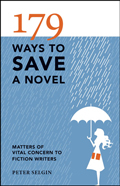
179 ways to save a novel 

Matters of Vital concern to Fiction writers 
by Peter Selgin
The ideas in this book are grouped under six headings: Substance; Structure; Style; Symbol, Myth & Metaphor; Soul and Other Matters.


Self Editing for Fiction writers
How to edit yourself into print 
by Renni Browne and Dave King
This book has great examples and also wonderful cartoons, although it does cover ground that will be familiar to most, such as 'show not tell'. I include it because it is the best basic book on editing I have ever found, and the instructions are really clear.

Front Cover

Between the Lines
Master the subtle Elements of Fiction writing 
by Jessica Morrell
Few books attempt to explore subtleties of tone and voice. This book does just this. Most of the examples given are from the US and this can be off-putting if you are a Brit, but it is still a book well-worth reading.


The Art of Fiction 
Illustrated from classic and Modern texts 
by David Lodge
A series of articles from The Independent on Sunday, this book covers such things as 'the intrusive author', 'intertextuality' and 'defamiliarization' using examples as diverse as Charlotte Bronte and Michael Frayn. It is a book of literary criticism from which writers can learn a lot, although it is not strictly speaking a 'how to' book. The examples in this book show just how far you can go as a writer to make your voice your own.