AddThis

Bookmark and Share
Showing posts with label recommended books. Show all posts

Thursday, 6 June 2013

Four books on writing that go beyond the basics

Like all writers, I love my craft. Many writing books are aimed at beginners and often give more experienced writers the same information re-packaged. As a writer who is already published you might think that I don't need to read any 'how to' books about writing, but actually the more I write the more interested I get in the subtle nuts and bolts of how storytelling works, and the more I admire other writers who do it differently.

If like me, you want to increase the subtlety in your work then I can recommend the following books. None of them is written by a writer I know, and none of them is about how to write a bestseller.  What are your favourite books on writing? I'd love you to leave me a comment! 
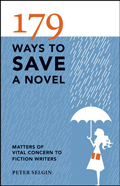
179 ways to save a novel 

Matters of Vital concern to Fiction writers 
by Peter Selgin
The ideas in this book are grouped under six headings: Substance; Structure; Style; Symbol, Myth & Metaphor; Soul and Other Matters.


Self Editing for Fiction writers
How to edit yourself into print 
by Renni Browne and Dave King
This book has great examples and also wonderful cartoons, although it does cover ground that will be familiar to most, such as 'show not tell'. I include it because it is the best basic book on editing I have ever found, and the instructions are really clear.

Front Cover

Between the Lines
Master the subtle Elements of Fiction writing 
by Jessica Morrell
Few books attempt to explore subtleties of tone and voice. This book does just this. Most of the examples given are from the US and this can be off-putting if you are a Brit, but it is still a book well-worth reading.


The Art of Fiction 
Illustrated from classic and Modern texts 
by David Lodge
A series of articles from The Independent on Sunday, this book covers such things as 'the intrusive author', 'intertextuality' and 'defamiliarization' using examples as diverse as Charlotte Bronte and Michael Frayn. It is a book of literary criticism from which writers can learn a lot, although it is not strictly speaking a 'how to' book. The examples in this book show just how far you can go as a writer to make your voice your own.

Tuesday, 4 December 2012

Celebrating the Missing Maidservants

Camille Pissarro 1857 The Maidservant
As you know, I like to write fiction about ordinary people in extraordinary circumstances. No Kings and Queens for me, but the hidden, often unseen, lives of the ordinary people. The missing maidservants so often ignored by historical biographers, but loved by historical novelists as the ideal witnesses to great historical events. With this in mind, my post on recommended books featuring feisty maidservants is over here at One Book at a Time along with a chance to win The Gilded Lily. Why not go over for a look to see which books I've chosen? Have you any historical fiction books you would recommend featuring interesting maidservants?

Below: A Woman and her Maidservant feeding a Pancake to a Dog.
by the Dutch artist Gabriel Metsu (1629-1667)In The Gilded Lily Sadie and Ella cook pancakes or griddle cakes in this way, although their surroundings are not nearly so lavish!


Below: Lady with her maidservant holding a letter by Jan Vermeer


Below: My favourite - The Chocolate Girl by Jean Etienne Liotard

The story behind the commissioning of this painting sounds like a fairy-tale romance. The girl in the portrait, Anna Baltauf, worked as a maidservant in one of the Viennese chocolate shops which had become hugely popular during the 17th and18th centuries. She had little chance of good marriage as her father was too poor to give her a good dowry, however in the summer of 1745, a young Austrian nobleman - Prince Dietrichstein - came into the shop. He fell in love with the Chocolate Girl and asked her to marry him, despite objections from his family As a wedding present to his 'chocolate girl' he commissioned this portrait of his wife wearing the maid’s costume she was wearing when he first set eyes on her. Is this true? I guess we'll never really know.
Ella Appleby from The Gilded Lily would have loved this story. It was what she dreamed about for herself! Sadie, her sister, would have gently told her to stop dreaming and to deliver the tray to the customer before the chocolate went cold.


Maidservants spent a lot of time fetching and carrying, but also a large proportion of their time cleaning - here is an interesting post about buttermaking and cleanliness in 17th century. Food for thought!